Therapy-Speak Left the Clinic
Words built for the consulting room are now used at brunch, in breakups and by HR. What the borrowing gave us, and what it quietly took away.
Society · · 9 min readIt is Sunday, a little after eleven, at a café in Indiranagar where the chairs do not match on purpose. Four women in their early thirties have a table by the window. Before the eggs arrive, Kavya has explained that she is setting a boundary with her mother-in-law, who rings every morning. Ritu has reported that her manager is gaslighting her about the appraisal. Sana has described a man she stopped seeing in August as a textbook narcissist, and the table has agreed. And all of them have sympathised with Meher, who got trauma-dumped on by a colleague in the lift.
They are clever, kind, well-read people. None of them is in therapy at present, though two have been. They are not showing off. This is simply the language in which personal life is now discussed, among a certain kind of person in a certain kind of city, and it would not occur to any of them that ten years ago nobody at this table would have used a single one of those words.
Last month a friend of Sana’s ended a fifteen-year friendship by text. Sana read it out. I’ve been reflecting on where I’m at, and I don’t think I have the capacity to hold space for this friendship right now. I’m choosing to honour my needs. I wish you healing. There was a silence.
“That’s actually very healthy,” Ritu said, after a moment, a little doubtfully.
How the words got out
Every profession has a private vocabulary, and most of them stay private. Nobody describes a disappointing holiday in the language of contract law. The vocabulary of psychotherapy escaped, and it is worth asking why that one did.
Partly it was carried out on purpose, and with good intentions. A generation of therapists took to Instagram to make mental health less frightening, and the format they were given was the square tile: six words in a pleasant font. A concept that takes a session to explain had to fit on a tile. You are allowed to set boundaries. Your feelings are valid. That wasn’t love, that was trauma bonding. These travelled, because they are consoling and because they flatter. Every one of them casts the reader as the person wronged.
Partly it was pulled. People badly wanted words for their inner lives and for what went on in their relationships, and the older vocabularies that used to supply them, religious, moral, literary, had gone quiet for the urban educated classes. Therapy-speak arrived sounding like science. To say “he hurt me” is a complaint. To say “he is a narcissist” is a finding.
And it has now gone where all successful language ends up, which is the office. Human resources departments speak of psychological safety and of bringing your whole self to work. A company announcing redundancies will say it wants to hold space for how people are feeling. When a vocabulary is being used by the people who are firing you, it has left the clinic for good.
Two words, as they were issued
It helps to go back to what a couple of these terms meant when they were in professional hands, because the distance travelled is the story.
Gaslighting
From a 1938 play, later a film, in which a husband dims the gas lamps and then insists to his wife that nothing has changed, as part of a campaign to make her believe she is going mad. The clinical sense is that narrow: a sustained, deliberate effort to make another person distrust their own memory and perception, usually so as to control them. It is a form of abuse, and rare. As now used, it means that someone remembered an event differently from me, or disagreed with my account of it, or lied.
Boundary
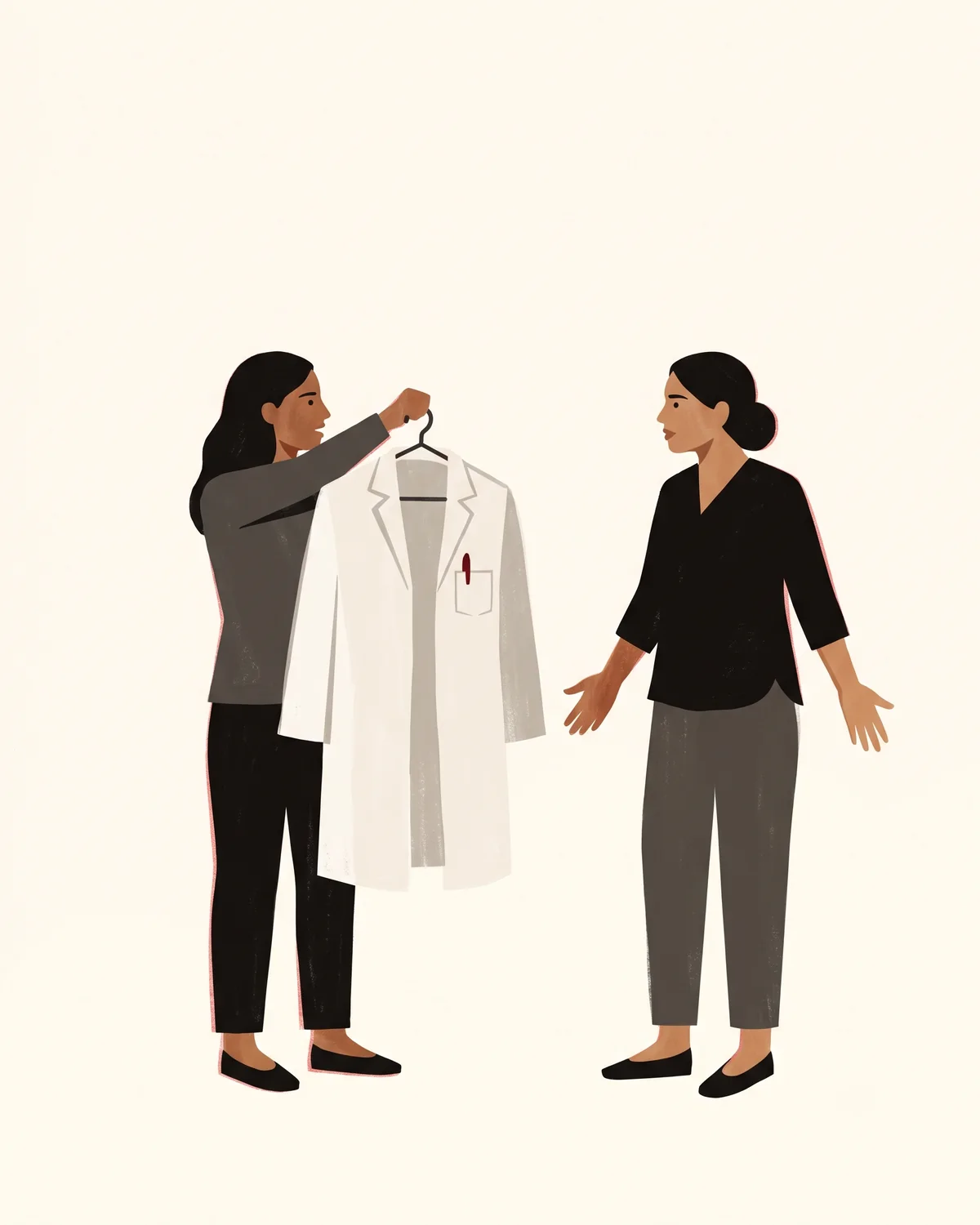
In therapy, a limit a person places on their own behaviour: if you shout, I will leave the room. It is a statement about what I will do, and it is enforced by my doing it. It was never an instruction to somebody else, and it gives no authority over them. As now used, it often means exactly that: a rule I have issued for your conduct, which you are violating. “I am setting a boundary: you may not bring up my drinking” is not a boundary. It is a demand in a lab coat.
One could go on. Trauma, which once referred to events of the order of assault and war, now covers a difficult boss and a bad date. Triggered, a precise term for what happens to someone with post-traumatic stress when a cue brings the event back, means annoyed. Toxic means I do not like them. Narcissist, a severe and uncommon diagnosis, means an ex.
A psychologist in Melbourne, Nick Haslam, gave this drift a name some years ago: concept creep. He noticed that the field’s concepts of harm, abuse, bullying, trauma, addiction, had each been steadily expanding, outward to cover new kinds of thing and downward to cover milder ones. He was careful to say it was not all bad. Widening the idea of abuse to include emotional cruelty was a gain. His point was that the expansion runs in one direction, and that nobody is in charge of it.
What was gained
It would be cheap to mock all this and leave it there, and it would miss something real.
There are women who stayed for years in marriages with men who controlled the money, read their phones and told them they were imagining things, and who got out after an article gave the pattern a name. The name mattered. Before it, there was only a private unease that everyone around them was contradicting. There are men who grew up in houses where no feeling was ever spoken of, and who at thirty-five have, for the first time, a few words for what goes on inside them. “Boundary”, used properly, has let a great many dutiful Indian daughters and daughters-in-law say no to something for the first time in their lives without the sky falling.
A language for inner life is a good thing to have. The question is what happens to it, and to us, when it becomes the only one.
What was lost
The first loss is precision, and it lands on the people the words were built for. If a rude remark is trauma and a disagreement is gaslighting, then the woman who was in fact systematically deceived for a decade has no word left that means what happened to her. She says gaslighting, and her listener thinks of an argument about who forgot to book the cab. Inflation does what it always does. It robs those who were holding the real currency.
The second is that these words, moved from the clinic to the quarrel, turn into weapons of a particular kind. They are diagnostic. A diagnosis is a statement made by an expert about a patient, and it is not open to reply. When Sana calls the man from August a narcissist, she is not describing how he behaved; she is classifying what he is, permanently, and placing herself in the position of the clinician. There is no answer to it. If he objects, that is what a narcissist would do. Ordinary moral language, he was selfish, he was vain, he lied to me, invites a conversation about what happened. Clinical language ends it.
Ordinary moral language invites a conversation about what happened. Clinical language ends it.
What you say
I’m protecting my peace. I’m honouring my needs. I don’t have the bandwidth for this right now. I’m removing toxic people from my life.
What you do
Stop replying to a friend in the middle of her divorce, because her calls are long and sad. Leave the family group after one argument. End fifteen years by text, in the passive voice, and feel that you have done something brave.
The third loss follows from the second. Therapy, for all its warmth, is a deliberately lopsided arrangement. For fifty minutes one person’s needs are the only subject, and the other person has none. That is what makes it work, and it is also what makes it a poor model for anything else. Friendship, marriage and family run on obligation in both directions, on putting up with people, on turning up when it is inconvenient. A vocabulary drawn entirely from the fifty minutes has plenty of words for my needs, my healing, my capacity, and almost none for duty, patience, loyalty or forgiveness. People who think only in that vocabulary can find, without ever intending it, that they have reasoned their way out of every relationship that asked something of them.
And there is a fourth, quieter cost to the speaker. Someone who describes every difficulty as a symptom and every hurt as a wound begins to regard herself as a patient, fragile, in recovery from her own life. The research on this is young, but there are early signs that teaching people to read ordinary distress as disorder can make them feel worse and cope less. A bad week at work is a bad week. Called burnout, anxiety and a toxic environment, it becomes a condition, and a condition is a thing that one has, and waits to be treated for.
The words that went missing
What is striking, listening at that table, is what has dropped out.
Nobody is sad. They are depressed, or in a low place. Nobody is shy; they have social anxiety. Nobody is nervous about Monday; they are anxious, a word that now does the work of about nine others. A friend is never merely thoughtless, a boss never simply unfair, a mother never just difficult and getting old. The plain words carried information. Sad is not the same as depressed. Unkind is not the same as abusive. They also carried a certain modesty, since to call someone unkind is to give an opinion, which they may dispute.
There is an Indian wrinkle as well. All of this is happening in English, among the fraction of the country that lives in it. Step outside that fraction and distress has other names: tension, BP, weakness, nerves, heaviness in the head, ghabrahat. Doctors call these idioms of distress, and they are not inferior. A woman in Tumakuru who tells her doctor she has “too much tension” is communicating at least as accurately as a woman in Indiranagar who says she is dysregulated. But only one of them will be recognised as talking about mental health, and therapy-speak has become, among its other uses, a way of showing which of the two one is.
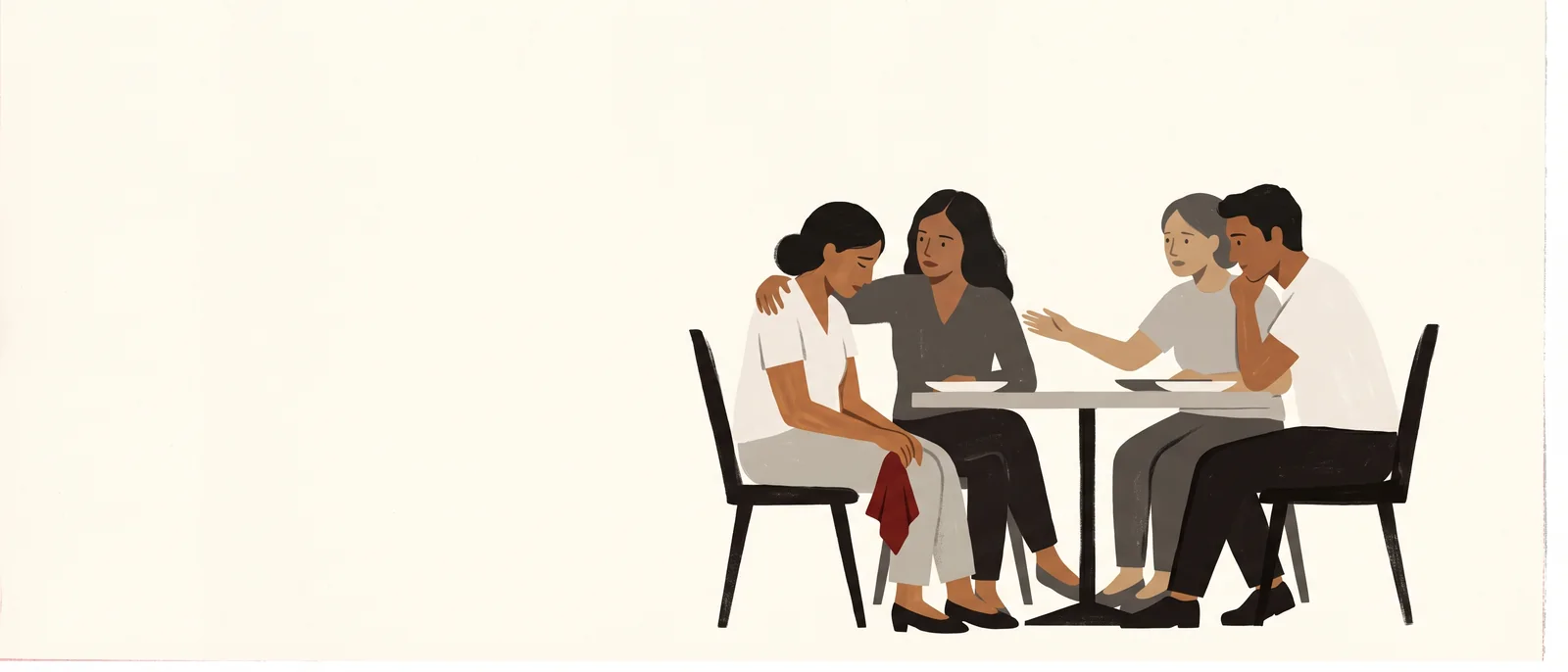
The eggs came, and the talk moved on to a wedding in Udaipur. It was Meher, who had said the least, who put her fork down.
“Can I say something? I don’t have a word for it.” She looked at the table. “I’ve just been really sad. Since about January. I don’t know why. Nothing happened.”
Nobody spoke for a second. There was nothing to set a boundary against and nobody to diagnose. The three of them looked at her, and it was apparent that each was searching for a term and not finding one.
Then Kavya moved her chair round, and put an arm across her shoulders, and said, “Okay. Tell us.”
Sources
- Haslam, N. (2016). “Concept creep: psychology’s expanding concepts of harm and pathology.” Psychological Inquiry, 27(1), 1 to 17.
- Foulkes, L. and Andrews, J. L. (2023). “Are mental health awareness efforts contributing to the rise in reported mental health problems? A call to test the prevalence inflation hypothesis.” New Ideas in Psychology, 69, 101010.
- Sweet, P. L. (2019). “The sociology of gaslighting.” American Sociological Review, 84(5), 851 to 875.
- Nichter, M. (1981). “Idioms of distress: alternatives in the expression of psychosocial distress. A case study from South India.” Culture, Medicine and Psychiatry, 5(4), 379 to 408.
The letter
One letter with each new piece. Nothing else, and your address goes nowhere.
We send one confirmation email. You are not on the list until you click it.
Replies
Nothing here yet.
Replies are for subscribers, signed in.
Sign inNot a subscriber yet?