Lime and Chillies
Changed every Saturday, meant to stop the evil eye. A retracted study, a failed repeat and a temple in Mauritius.
Society · · 5 min readWho is the lime for?
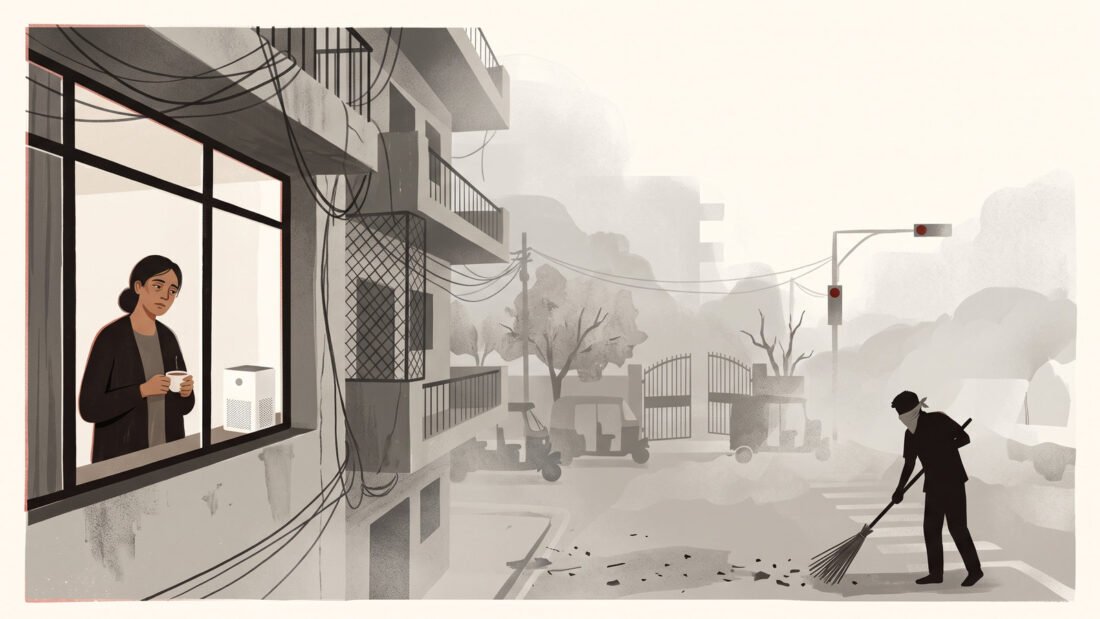
It hangs over the door of the hardware shop, a lime and a few green chillies threaded on a cotton string, usually seven, and it is changed on Saturday morning by a boy who works his way down the market with a basket of them. It hangs from the bumper of the new car, the grille of the lorry and the door frame of the flat that was painted last week. Ask the man behind the counter and he will tell you what everyone says: it keeps off nazar, the envious eye of the passer-by. He will say it with a small smile that admits he does not entirely believe it, and has no intention whatever of stopping.
The educated response is to laugh, and the educated person laughing usually has a ritual of their own. The seat that must not be changed during a run chase. The pen that went into every exam since the tenth. Touch wood, said aloud and accompanied, where possible, by actual wood.
The best account of why people do this is a hundred years old. During the First World War the anthropologist Bronisław Malinowski lived among the Trobriand Islanders in the western Pacific and watched them fish. In the calm inner lagoon, where a skilled man could count on his catch, they used no magic at all. On the open sea, where canoes were lost and the shoals came and went without warning, the ritual was elaborate and no canoe set out without it. Magic, Malinowski concluded, appears exactly where knowledge runs out and the stakes stay high. It is a technology for the part of life that technology cannot reach.
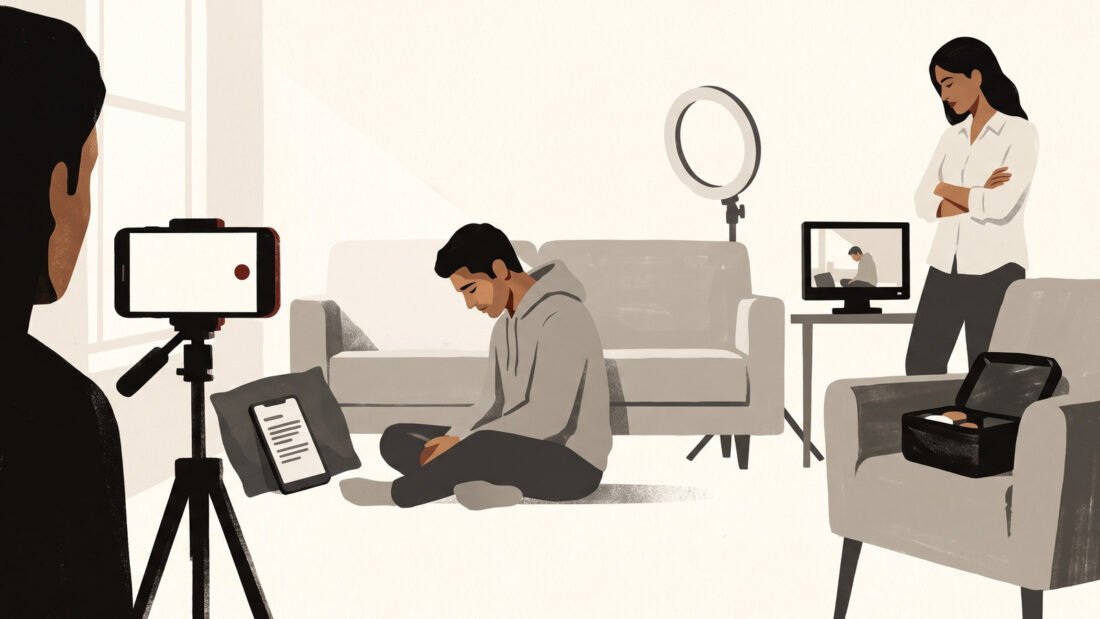
Modern psychology spent a decade trying to prove something stronger, and the attempt has not gone well. The most celebrated experiment, published in 2016, reported that people who performed a short invented ritual before singing in front of strangers were less anxious and sang better. In 2024 the journal retracted it, at the authors’ own request, after problems were found in its data. A study from 2010 found that students told their golf ball was lucky sank more putts; a pre-registered repetition in 2014, with far more students, found no lucky ball at all. Lucky charms, as far as anyone can now show, do not improve anything you could measure with a scoreboard.
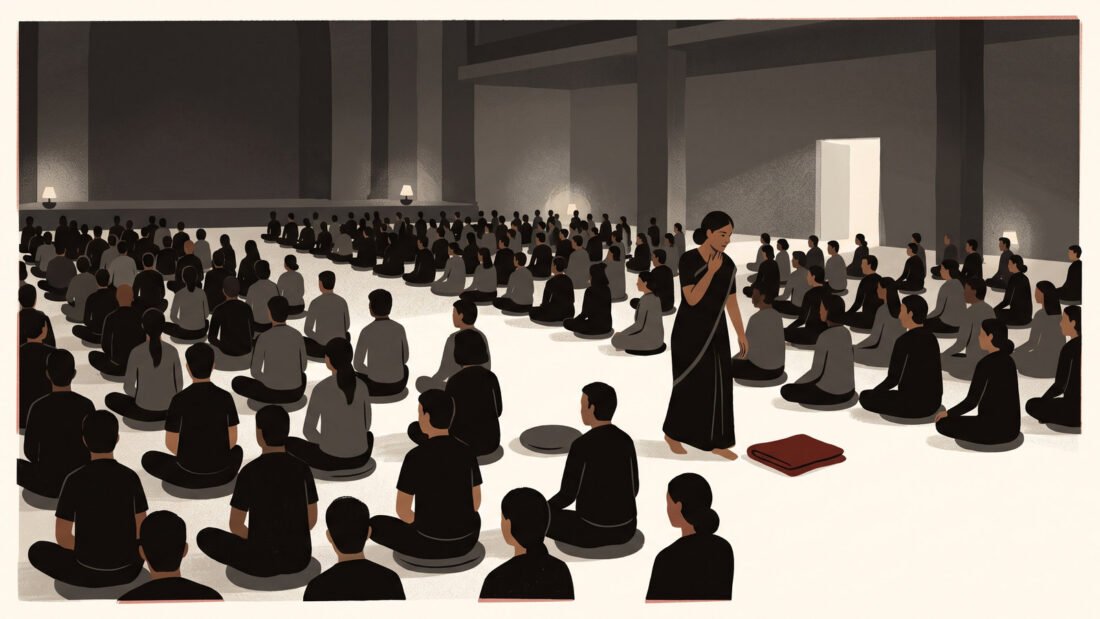
What survived is smaller and better. In 2020 the anthropologists Martin Lang and Dimitris Xygalatas worked with a Marathi Hindu community in Mauritius, an island where cyclones and floods are not hypothetical. They gave people a stressful task, preparing a plan for a natural disaster that would be judged by government experts, and then sent some of them to perform a familiar ritual at the local temple while others sat and rested in an ordinary room. The people who performed the ritual showed a larger fall in anxiety, measured both by what they reported and by their hearts. They grew calmer. Whether their plans got any better, the study did not ask.
The lime has been illustrating it for centuries. A ritual is a small act, fully under your control, performed at the edge of something large that is not. It replaces, for a minute, a feeling of helplessness with a feeling of having done something, and the body seems to believe it even when the mind does not.
The people who know the most about physics are not immune. Before Chandrayaan-3 lifted off in July 2023, a team of the space agency’s scientists carried a miniature model of the craft up the hill to the temple at Tirupati, a visit reported before other launches too. Nobody at the agency thinks the deity adjusts the orbit. A launch is the open sea.
There are two places where the lime stops helping. The first is when the act has to be repeated until it feels right, and the feeling never quite arrives; at that point the ritual has stopped reducing anxiety and started manufacturing it, and clinicians have another name for it. The second is when the ritual stands in for the thing it should accompany: the lorry with a fresh string of chillies on the grille and brakes that were last looked at in March. The open-sea fishermen still learned to read the weather. They did the magic as well.
For everyone else the trade is a fair one. The string costs a few rupees, has no side effects and is renewed weekly by a boy with a basket.
The man behind the counter says it is for the passer-by. It faces the street, and every Saturday morning it does all of its work on the man who paid for it.
Sources
- Malinowski, B., Magic, Science and Religion and Other Essays (The Free Press, 1948; title essay first published 1925).
- Brooks, A. W., Schroeder, J., Risen, J. L. et al. (2016). “Don’t stop believing: rituals improve performance by decreasing anxiety.” Organizational Behavior and Human Decision Processes, 137, 71 to 85. Retracted, 2024.
- Damisch, L., Stoberock, B. and Mussweiler, T. (2010). “Keep your fingers crossed! How superstition improves performance.” Psychological Science, 21(7), 1014 to 1020.
- Calin-Jageman, R. J. and Caldwell, T. L. (2014). “Replication of the superstition and performance study by Damisch, Stoberock, and Mussweiler (2010).” Social Psychology, 45(3), 239 to 245.
- Lang, M., Krátký, J. and Xygalatas, D. (2020). “The role of ritual behaviour in anxiety reduction: an investigation of Marathi religious practices in Mauritius.” Philosophical Transactions of the Royal Society B, 375(1805), 20190431.
The letter
One letter with each new piece. Nothing else, and your address goes nowhere.
We send one confirmation email. You are not on the list until you click it.

Replies
Nothing here yet.
Replies are for subscribers, signed in.
Sign inNot a subscriber yet?