Two Hours to Work
A flat fifteen kilometres out, shown on an empty Sunday. Economists priced the drive home in 2008. You still pay.
Work · · 4 min readThink back to the flat you were shown on a Sunday. The roads were empty. The broker drove you from the office to the gate in twenty-five minutes, pointed out the clubhouse, the second balcony and the stop for the school bus, and mentioned that a metro line was coming. It was a good flat, and it was cheaper than anything near the office by a margin that made the decision feel like arithmetic. You did the arithmetic. You signed.
Nobody shows a flat on a weekday at a quarter to seven in the evening.
In the traffic index that TomTom published this January, covering 2025, Bengaluru was the second most congested city on earth, behind Mexico City. In the evening rush the average car here covers ten kilometres in a little over forty-five minutes. The morning is barely kinder. At those averages, fifteen kilometres from the office, which is roughly where the cheaper flats begin, comes to about two hours a day, there and back. The index also gives the time lost to rush hour, 168 hours a year, and that is the number the newspapers print. It is the smaller number.
Do the other sum. Two hours a day, for the 230 or so days a year that a salaried person goes in, is 460 hours. Over ten years, which is about how long it takes a twenty-year home loan to start feeling like progress, it is 4,600 hours: more than nine months of waking life, spent in the same seat, facing the same brake lights.
Economists have a name for this. In 2008 two of them, Alois Stutzer and Bruno Frey, went through a large German household survey to test something their discipline took for granted. The theory said that people would put up with a long commute only if they were paid for it, in a higher wage or a cheaper home, so those who travel far should be exactly as satisfied with their lives as those who do not. They were less satisfied, and the longer the journey, the wider the gap. Frey later put it in plain numbers: someone travelling an hour each way would need about forty per cent more pay to be as satisfied as someone who walks to work. They called it the commuting paradox, because by their own model it should not exist.
Their best guess at why people keep making the trade is that the trade is misjudged at the moment of choosing. The extra bedroom can be walked through on a Sunday. The hours cannot. They arrive later, one evening at a time, each too small to argue with.
Psychologists have measured the hours from the inside. When Daniel Kahneman and his colleagues asked 909 working women in Texas to rebuild the previous day episode by episode, and to score how each part had felt, the commute came last for enjoyment, below work and below housework.
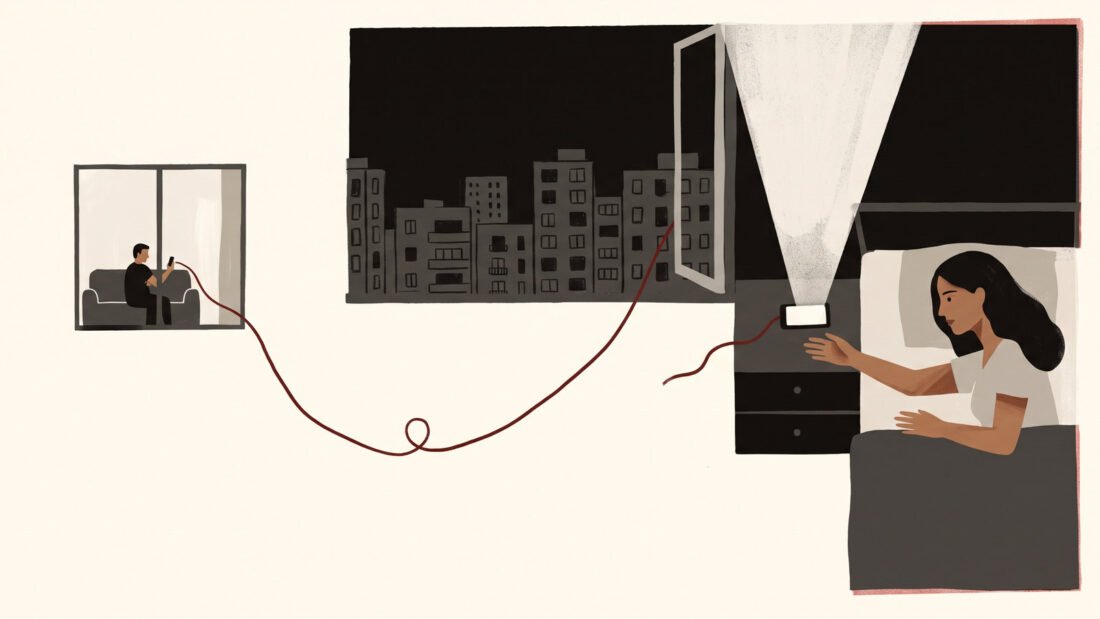
And yet a short commute does something useful. Jon Jachimowicz and his colleagues, writing in 2021, found that the journey works as a corridor between the person who lives at home and the person who turns up at work, and that people who used some of it to think ahead about their day, deliberately, took a long commute better than people who did not. Twenty minutes is a corridor. Two hours is a room, and in this city the room has a laptop open in it. The call that starts in the cab at half past eight and the call still going at the signal at seven have turned the corridor into a second shift, done sitting down, and unpaid.
The cheaper flat may still be the right flat. Rents near the office are what they are, and for a great many families the long road is the only road. But the question worth asking before the next signature is the one the broker never puts: what is the drive at a quarter to seven on a weekday, and what is an evening worth?
At the evening average, the fifteen kilometres home take sixty-eight minutes. The broker did them in twenty-five, on a Sunday.
Sources
- TomTom (2026). “Bengaluru traffic report.” TomTom Traffic Index, 2025 ranking.
- Stutzer, A. and Frey, B. S. (2008). “Stress that doesn’t pay: the commuting paradox.” Scandinavian Journal of Economics, 110(2), 339 to 366.
- Kahneman, D., Krueger, A. B., Schkade, D. A., Schwarz, N. and Stone, A. A. (2004). “A survey method for characterizing daily life experience: the day reconstruction method.” Science, 306(5702), 1776 to 1780.
- Jachimowicz, J. M., Lee Cunningham, J., Staats, B. R., Gino, F. and Menges, J. I. (2021). “Between home and work: commuting as an opportunity for role transitions.” Organization Science, 32(1), 64 to 85.
The letter
One letter with each new piece. Nothing else, and your address goes nowhere.
We send one confirmation email. You are not on the list until you click it.


Replies
Nothing here yet.
Replies are for subscribers, signed in.
Sign inNot a subscriber yet?