The Layoff Arrived by Calendar Invite
Fifteen minutes, two faces on a screen, one of them from HR. Losing a job is a financial event for about a week. After that it is a question about who you are.
Work · · 10 min read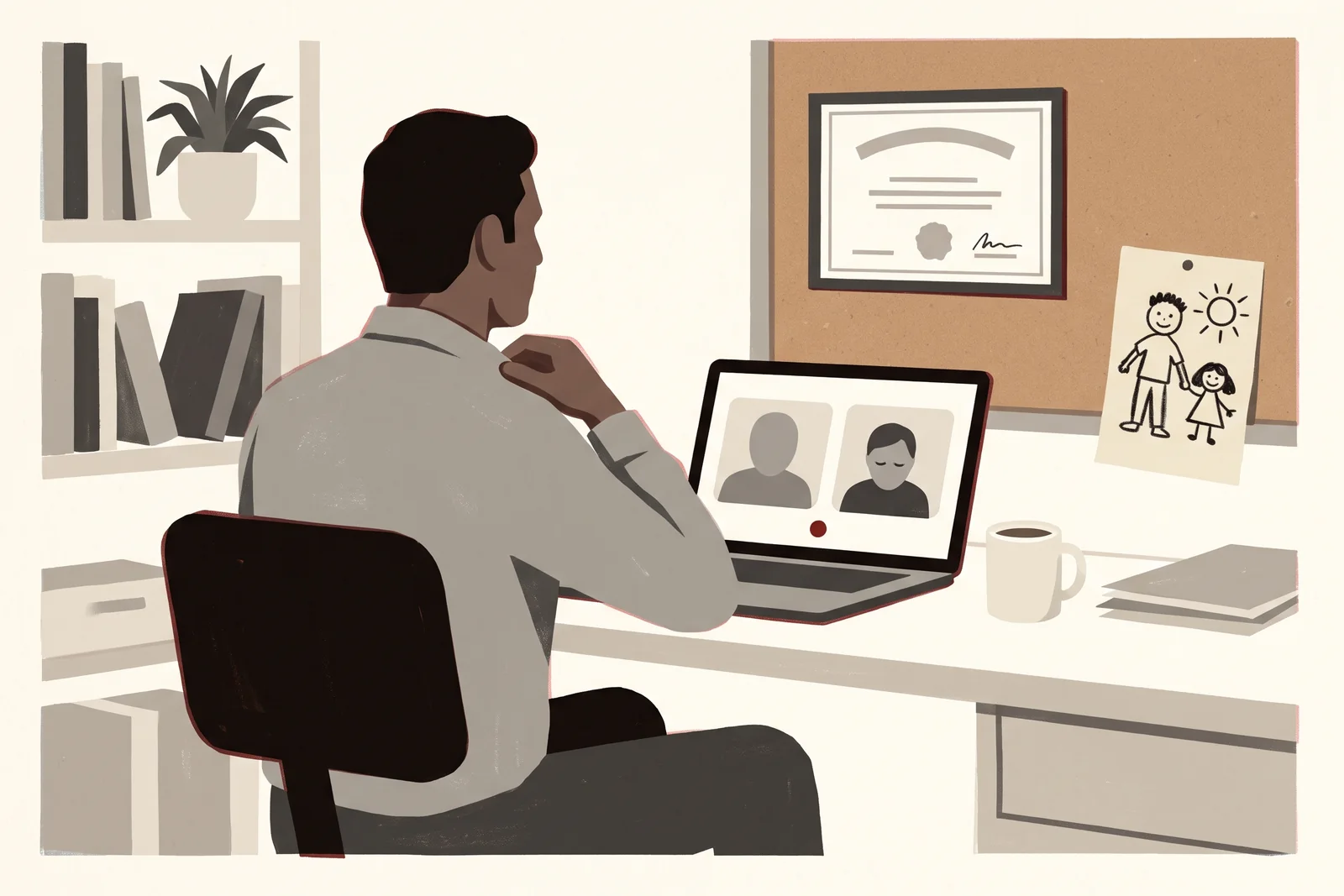
9.15 a.m. "Quick sync." No agenda. One attendee he had never met.
The invitation arrived at 8.52 on a Tuesday morning, for a meeting at 9.15. Title: Quick sync. Duration: fifteen minutes. No agenda. Two attendees besides himself: his director, and a name Prashant did not know, which when he hovered over it resolved into People Partner, APAC.
He knew then. Everyone knows then. He had sat through two earlier rounds at this company as a survivor, and had written a warm LinkedIn recommendation for a colleague who went in the second. He straightened his collar anyway before joining, which he thought about afterwards.
His director read from something just below the camera. The words were restructuring, difficult decision, not a reflection of your performance. The woman from HR took over and used the phrase your last working day is today. There was a link to a document. His laptop access would end at noon. Were there any questions? He heard himself ask about the medical insurance, in a perfectly steady voice, as though enquiring on behalf of a friend.
It was 9.26. He was forty-one, an engineering manager with sixteen years’ experience, a home loan, a daughter in Class 6 at a school that charges what such schools charge, and a calendar that for the first time since 2009 had nothing in it.
Composite. Prashant is a composite, and the company is nobody’s in particular. The script of the call will be familiar to a great many people in Bengaluru, Hyderabad, Gurugram and Pune.
What a job was doing
The money is what everyone asks about, and the money matters. He has about seven months of expenses if they are careful. But the research on unemployment has been making the same point for ninety years, and the point is that the wage is the least of what a job supplies.
In the 1930s a social psychologist named Marie Jahoda studied an Austrian village where the only factory had closed. She expected to find anger. She found something nearer to slow collapse. Men who now had all the time in the world walked more slowly, stopped reading the free newspapers in the library, and could not say how they had spent the day. From this she drew up a list of what work gives a person apart from pay, and it has never been bettered. It gives the day a structure. It gives regular contact with people outside the family. It ties a person to purposes larger than his own. It gives him a standing, an answer to the question of what he is. And it makes him be active. Take the job away and all five go at once, on the same morning.
All five go at once, on the same morning.
Prashant met all of this within a fortnight. By the second week he was waking at the usual time with nowhere to put the energy. The forty people he used to speak to in a day went to zero; he found that he had very few friends who were not colleagues, and that ex-colleagues, though kind, are busy. Nothing he did between nine and six had consequences for anyone. And there was the question of what he was. Every form, every introduction, every conversation at the school gate begins with what do you do, and he had answered it the same way for sixteen years without realising how much of his weight rested on the answer.
The identity problem
In India’s salaried middle class, the company is not a detail. It is a surname. He is Prashant from such-and-such, in the apartment WhatsApp group, in his wife’s family, in the minds of his parents’ neighbours in Hubballi, who have been told about the firm’s campus. The job was how his father explained him to people. It was also, less comfortably, a large part of how he explained himself to himself. He was good at it. He was the one who stayed calm during outages. He had a team who liked him.
All of that was real, and none of it was on the document behind the link. What the document said, in effect, was that a spreadsheet had been sorted by a column and his row was below a line. He understands this. He has been on the other side of such spreadsheets. He knows, as a matter of fact, that the decision was about cost centres, that three people better than him went in the same round, that whole functions are being thinned as the tooling improves and fewer managers are needed per engineer.
Knowing it does nothing. The mind does not accept “it was not about you” as an explanation for something that happened to you. He lies awake running the alternatives: the project he should have fought for, the director he should have cultivated, the reskilling he put off. Some part of him would prefer it to be his fault. A mistake can be corrected. A world in which sixteen years of good work confers no protection at all is a much more frightening place.
Laid off
Dismissed for reasons that have nothing to do with how well one worked. The phrase exists to draw that distinction, and almost nobody on the receiving end can feel it. What ought to produce anger or worry commonly produces shame: the sense of having been exposed as less than one appeared, and an urge to hide. It is why people who have done nothing wrong behave, for weeks afterwards, like people with a secret.
The man who still leaves at 8.40
He told his wife that evening. It took him eleven days to tell his parents, and when he did, he described it as a decision to take a break and look around.
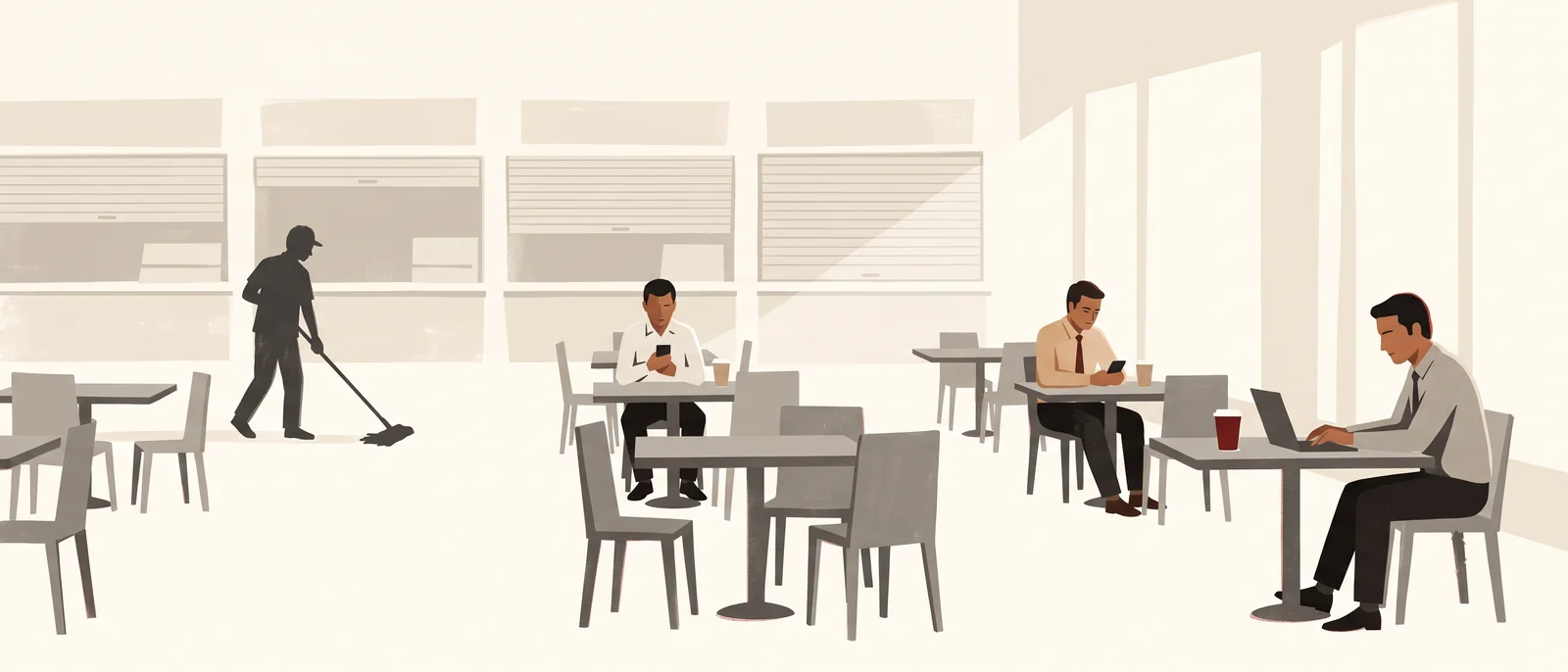
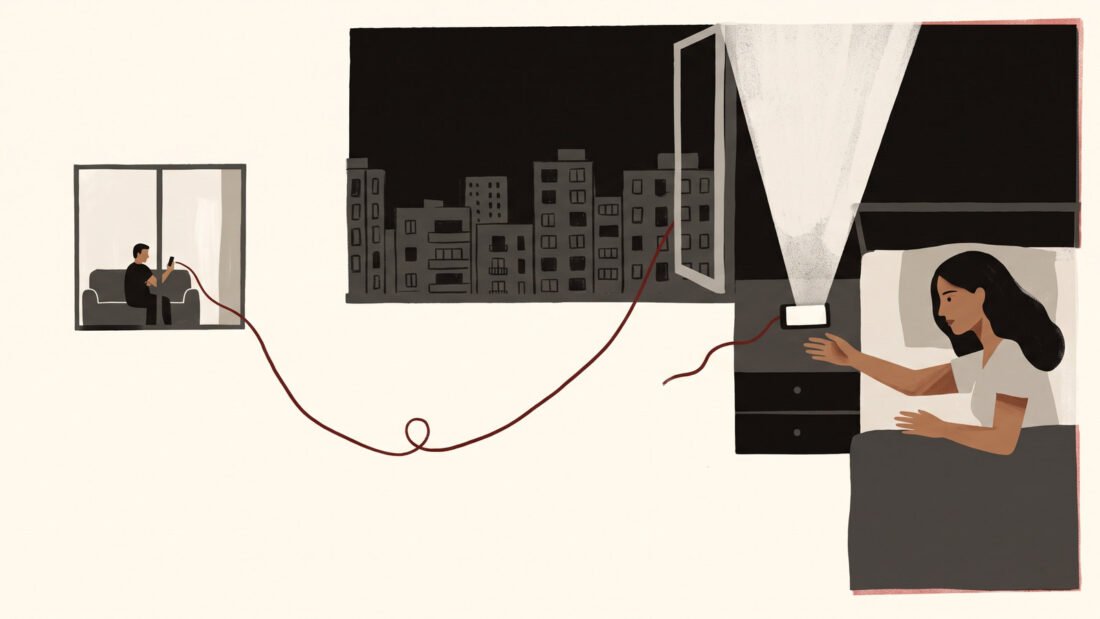
This is common enough to be a pattern, and sometimes it goes much further. There are men in every Indian city who have been out of work for months and whose families do not know. They dress, take the laptop bag, leave at the usual hour, and spend the day in a mall food court or a public library or a parked car, applying for jobs on their phones, and come home at seven with a small account of the day. It sounds like something from a film. Career counsellors and therapists will tell you it is not rare.
It is easy to call this pride, and that is not quite right. It is the logic of someone whose place in the family has always been stated in terms of what he provides. If he is the salary, then without the salary what is he bringing through the door? He cannot yet imagine that he might be wanted there for some other reason, and he has never tested it, because until now he never had to. The concealment is meant to protect them. What it actually does is ensure that at the worst moment of his working life he is entirely alone, and using up what energy he has on stagecraft.
It is harder for men, on the whole, for exactly this reason: the identity is narrower, with more of its weight on one pillar. Women who lose jobs suffer too, and are often under-counted because they are assumed to have a home to fall back on, as if that were a consolation. But study after study finds the blow to mental health is larger for men, and largest where the man is the main earner and believes that is what he is for.
What the numbers say
The psychological damage of unemployment is one of the better-established findings in social science. Across hundreds of studies, the out-of-work show roughly double the rate of depression and anxiety of the employed, and the effect is causal: when people find work again, they recover. It gets worse with duration. The first weeks often carry a strange lift, a holiday feeling, a burst of plans. The trough tends to come between the third and the sixth month, when the early applications have produced silence, the first interviews have led nowhere, and the hours have lost their shape.
There is one finding in that literature that ought to be better known. It matters a great deal whether a person loses a job alone or in company. Where unemployment is widespread and visibly nobody’s fault, the damage to the individual is smaller. It is the solitary job loss, the one that feels like a personal verdict, that does the most harm. Which suggests that a good part of the injury is in the interpretation and not in the event.
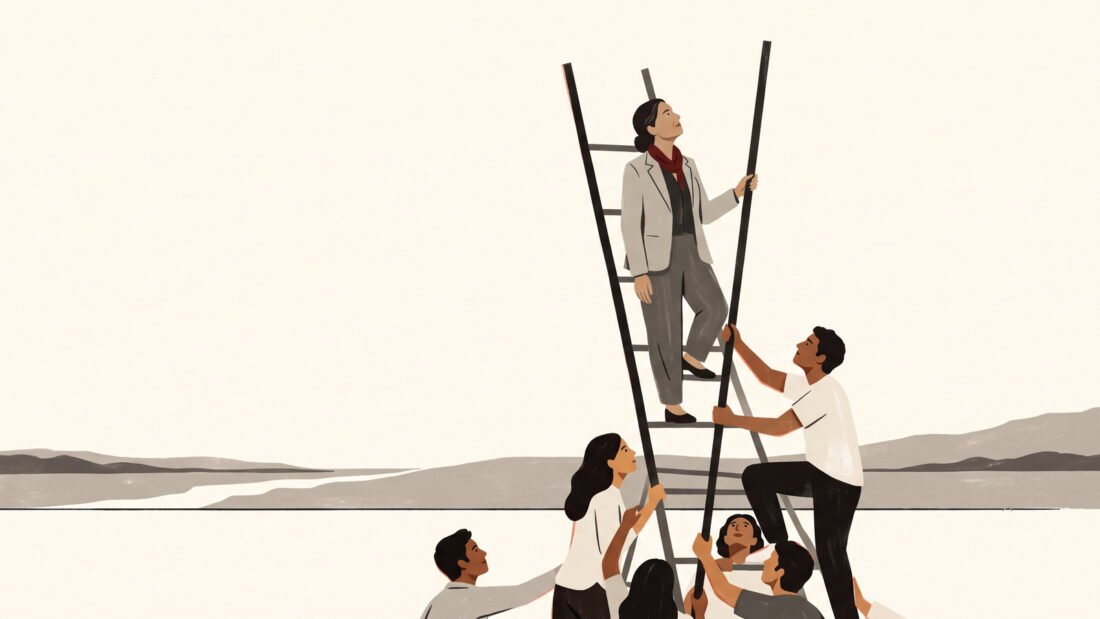
That is an argument for doing the opposite of what instinct suggests. Instinct says: say nothing, fix it quietly, reappear when there is a new title to announce. The evidence says: tell people, quickly and plainly. Tell the family, because a household can adjust to a fact and cannot adjust to a performance. Tell the network, because that is where jobs come from; in most studies, more people find work through someone they know than through any application. And find the others. There are several thousand people in the same city in the same position, and an hour with three of them does more for the sense of being a defective unit than a month of private reasoning.
- Keep the scaffold. Get up at the same time. Dress. Leave the house for part of the day. Give the search fixed hours, with a start and a stop. The day’s shape was the first thing the job provided, and it is the first thing to replace.
- Tell the truth at home, early. Including, in words suited to her age, to the child, who already knows something is wrong and has filled the gap with something worse.
- Do not search for eight hours a day. Nobody can, and the attempt produces a great deal of refreshing of inboxes. Three good hours, and then something with a visible result: a run, a repair, a meal cooked.
- Watch the evening drink and the 2 a.m. scroll. Both expand to fill unstructured time, and both make the next morning worse.
What it leaves
Most people in his position find work. It usually takes longer than they expected, and the job is often not the one they pictured. What is interesting is what the episode leaves behind.
Some come out of it smaller: more anxious, more deferential, grateful to any employer, permanently braced. Others describe, a year or two on, an odd enlargement. Having had the title removed, and having discovered who was still on the phone afterwards, they hold the next title more loosely. They have been taught, at some cost, that the company was never a surname. It was a contract, which the other party was always free to end on fifteen minutes’ notice, and they adjust their loyalties to fit. They see more of their children. They keep up two friendships that have nothing to do with work. They still work hard. They have stopped confusing it with being safe.
Which of the two it turns out to be seems to depend less on how long the search lasts than on whether, during it, the person was alone.
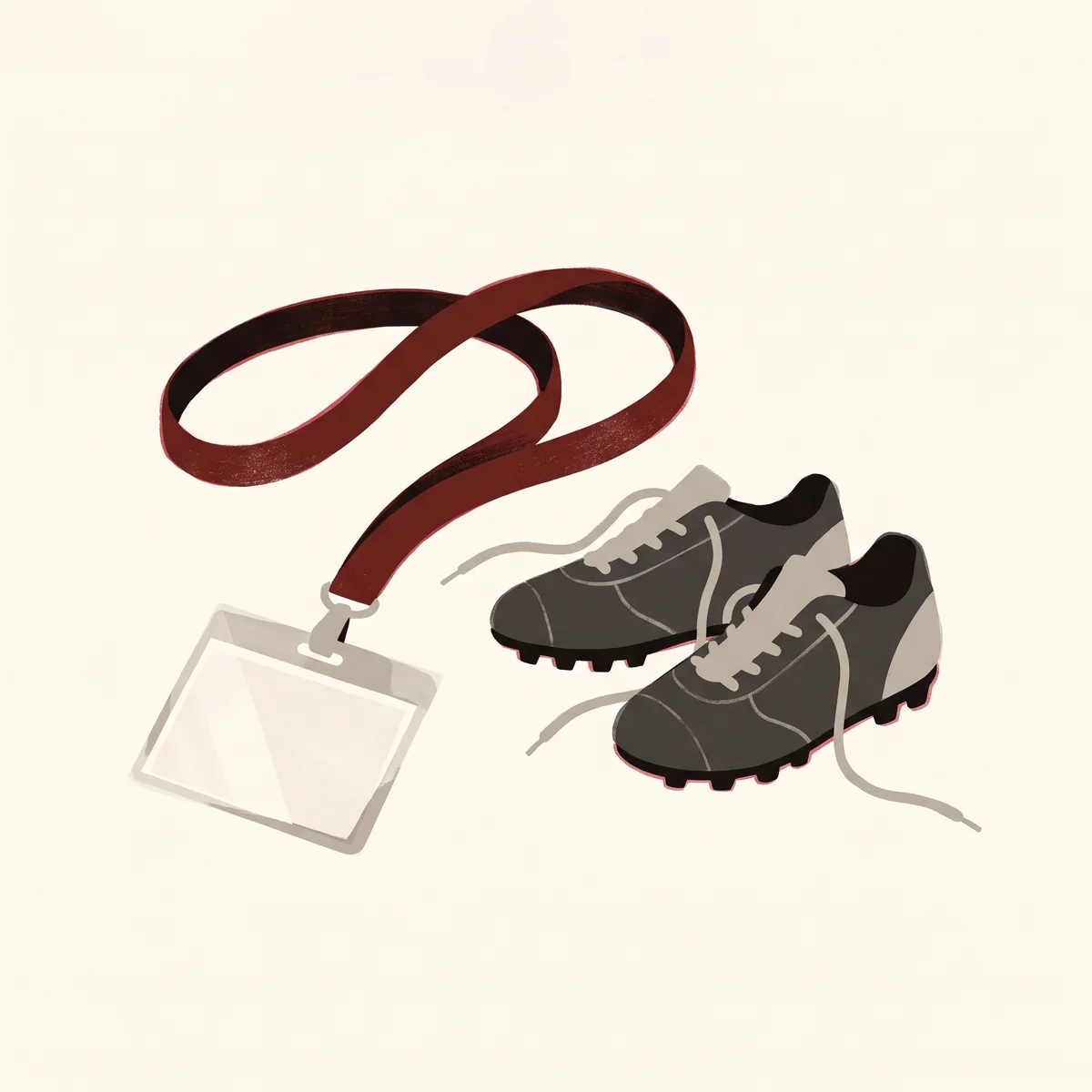
On the twelfth day Prashant’s daughter, who is eleven, found him at the dining table at half past three in the afternoon, which was not where he was usually to be found at half past three. She looked at the laptop, and at him.
“Did you get fired?” she said.
“Laid off,” he said. “It’s different.” He began to explain how it was different, and heard himself, and stopped. “Yes,” he said. “More or less.”
She thought about this. “Okay. Can you come for the match on Friday, then? You never come.”
Sources
- Jahoda, M., Lazarsfeld, P. F. and Zeisel, H., Marienthal: The Sociography of an Unemployed Community (1933; English edition, Aldine, 1971), and Jahoda, M., Employment and Unemployment: A Social-Psychological Analysis (Cambridge University Press, 1982).
- Paul, K. I. and Moser, K. (2009). “Unemployment impairs mental health: meta-analyses.” Journal of Vocational Behavior, 74(3), 264 to 282.
- Clark, A. E. (2003). “Unemployment as a social norm: psychological evidence from panel data.” Journal of Labor Economics, 21(2), 323 to 351. On why job loss hurts less where it is widely shared.
- Granovetter, M., Getting a Job: A Study of Contacts and Careers (second edition, University of Chicago Press, 1995).
The letter
One letter with each new piece. Nothing else, and your address goes nowhere.
We send one confirmation email. You are not on the list until you click it.

Replies
Nothing here yet.
Replies are for subscribers, signed in.
Sign inNot a subscriber yet?