3 a.m. Is a Bad Lawyer
The mind that wakes you in the small hours is not the one you would hire in daylight.
The Mind · · 9 min read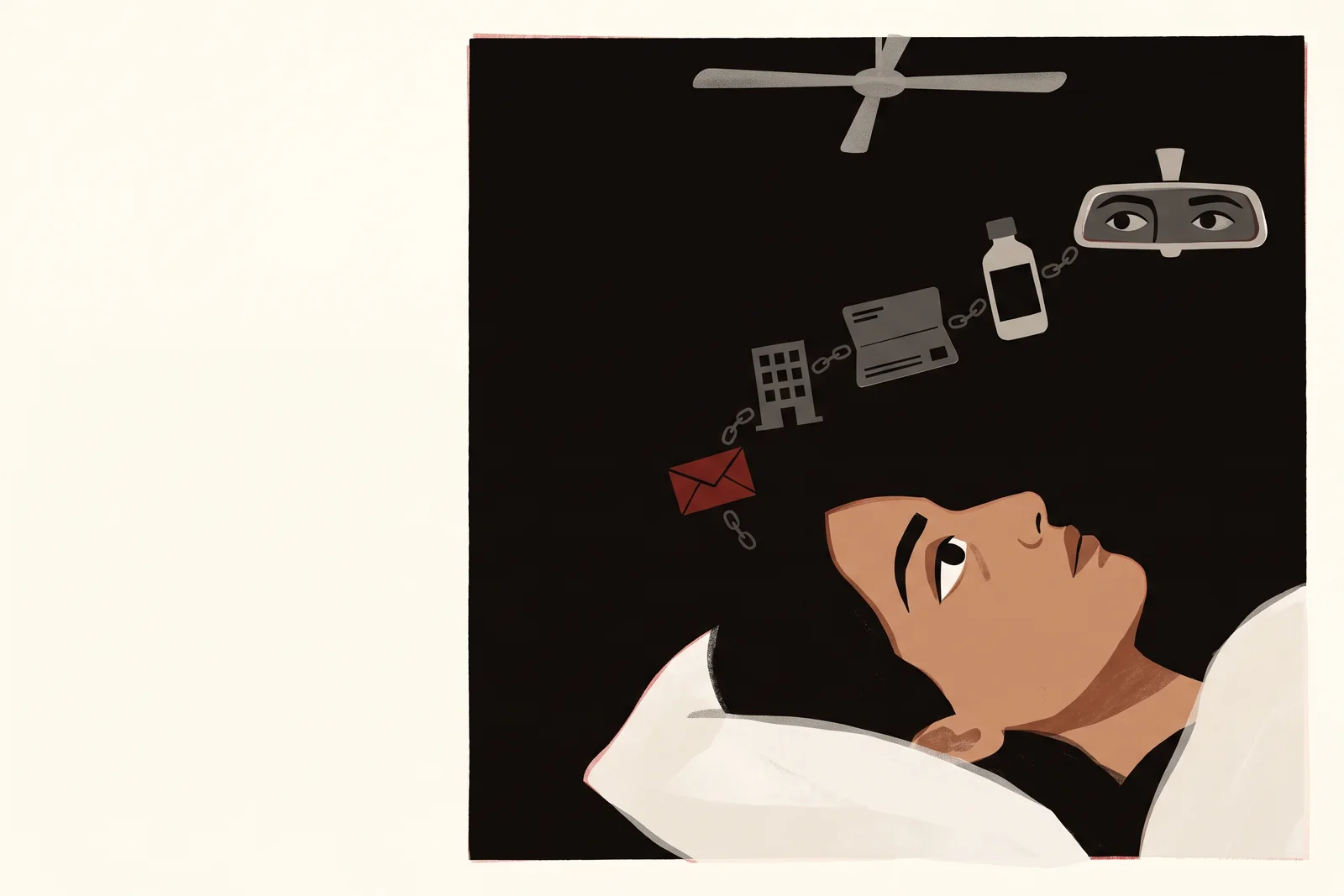
3.07. The court is in session.
The clock on the bedside table says 3.07, in red. Nandita did not wake to a noise. The flat is quiet, the fan is turning, her husband is breathing evenly on his side with the untroubled stupidity of the sleeping. She is simply awake, the way a light is simply on, and for about four seconds her mind is empty.
Then it produces a phrase. As discussed. She wrote it in an email at twenty to six the previous evening, to a vice president, about a deadline. As discussed. Had they discussed it? They had, more or less. Would he remember it that way? The phrase now sounds, in the dark, faintly insolent. He had not replied by the time she went to bed.
By 3.11 she is going to be managed out by March. By 3.15 she has run the numbers on the home loan on one salary. At 3.19 she recalls that her mother has had a cough for three weeks and has not seen anyone about it. At 3.24, from nowhere, comes the memory of being sharp with a cab driver in 2017, and his face in the mirror.
She is thirty-eight, good at her job, and in daylight not an especially anxious person. None of that is admissible here.
The docket
The mind files its complaints at night. For some people it is the hour before sleep; for a great many it is later, in the small hours, and what convenes to hear the complaints is a kind of court. It is an odd court. There is a prosecutor of enormous energy. There is no counsel for the defence. The judge is asleep. And every case on the docket, however trivial, is tried as a capital offence.
What is notable is how consistent the experience is between people who have nothing else in common. The subjects differ: money, health, children, a remark made at dinner. The manner is the same. The thoughts arrive with a peculiar certainty. They link up, each leading to a worse one. They range across decades with no regard for relevance. And they are unanswerable, in the specific sense that the person lying there cannot think of the answer, though she could have given three at lunchtime.
That last feature is the clue. The thoughts are not better at night. The thinker is worse.
The thoughts are not better at night. The thinker is worse.
Why this hour
Begin with the waking itself, which alarms people more than it should. Nobody sleeps through the night. Sleep runs in cycles of about ninety minutes, and between cycles there is a brief surfacing, several times a night, which is forgotten by morning unless something catches. In the second half of the night sleep is lighter, dreams are more frequent, and the surfacings are closer to the top. Three o’clock is when a normal, shallow waking is most likely to be noticed. Whether it then lasts ten seconds or two hours depends on what the mind does next.
And the mind at that hour is not running at full strength. Body temperature is near its daily low. The hormones that prepare the body for morning have begun their climb, which means a system built for alertness to threat is warming up, in the dark, with no threat to attend to. The parts of the brain that handle perspective, the ones that say this is probably fine and you have dealt with worse, are the parts most impaired by being awake in the biological night. A group of sleep researchers set this out in 2022 under the title “the mind after midnight”. Their argument is that a brain awake when it is built to be asleep is tilted towards the negative, poor at weighing consequences, and short on restraint. They point out that, relative to the number of people awake at the time, the small hours carry more than their share of the worst decisions people make.
There is a simpler factor as well, which is that nothing else is happening. At two in the afternoon, a worry about an email competes with a meeting, a phone, lunch, a colleague with a question. At three in the morning it has the whole room. It cannot be checked against anyone; there is no one to say “he never reads his email after six, you know that”. And nothing can be done. Every worry that daylight would convert into an action, a call, a message, a look at the bank statement, can at night only be thought about. Thinking without the possibility of doing is a fair definition of the following word.
Rumination
Going over the same trouble again and again without arriving anywhere. It feels like working on a problem, which is why people persist with it. The test is where it ends. Problem-solving ends in a next step. Rumination ends where it started, with a faster pulse.

How the prosecution works
The method has a few standard moves, and it helps to know them, in the way it helps to know how a card trick is done.
The first is the chain. No single step is absurd. An unanswered email could mean displeasure. Displeasure could affect the appraisal. A poor appraisal, in this market, could mean the list. Each link is possible, and the prosecutor’s skill lies in treating possible as certain five times in a row. By the end, a missing reply has become a repossessed flat, and the route there felt like reasoning.
The second is the selection of evidence. A mind in a state of threat retrieves memories that match the state. This is well established and quite mechanical: fear calls up fearful things, shame calls up shameful ones. It is why the cab driver from 2017 appears, uninvited, in a hearing about a work email. He is not relevant. He is merely filed under the same mood. At three in the morning the archive opens at the page marked evidence against, and it is a long page, because everybody’s is.
The third is the absence of any statute of limitations. Matters settled years ago are reopened. Apologies that were made and accepted are found insufficient. Decisions taken at twenty-five are reviewed with the knowledge of thirty-eight.
The fourth, and the one that does the lasting harm, is the move from the event to the person. The email stops being an email and becomes a sample of what she is like: careless, presumptuous, someone who has been getting away with it for years and is about to be found out. Whatever the charge, every case in this court ends in the same finding, and the finding is about the defendant.
The mistake of arguing back
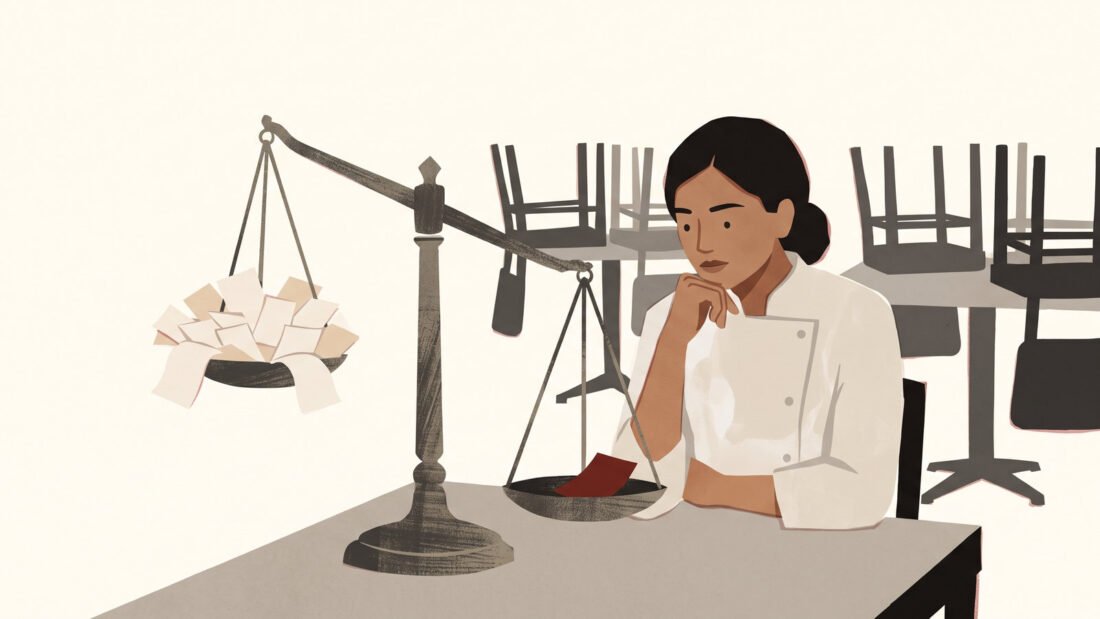
The natural response is to mount a defence. Nandita does. He has never been unreasonable. The deadline was agreed. She has had good reviews four years running. It is a sound case and it does no good, because for every point the prosecution has three more, and she is arguing at a fraction of her usual capacity against an opponent that does not tire. Forty minutes on she is more awake than when she started and no less convicted.
The other natural response is to try very hard to sleep, which fails for a different reason. Sleep is one of the few things that effort makes worse. She looks at the clock: 3.52. She does the sum that everyone does. If I fall asleep in the next ten minutes I will get two hours and fifty minutes. The sum is not soothing. It is a fresh charge.
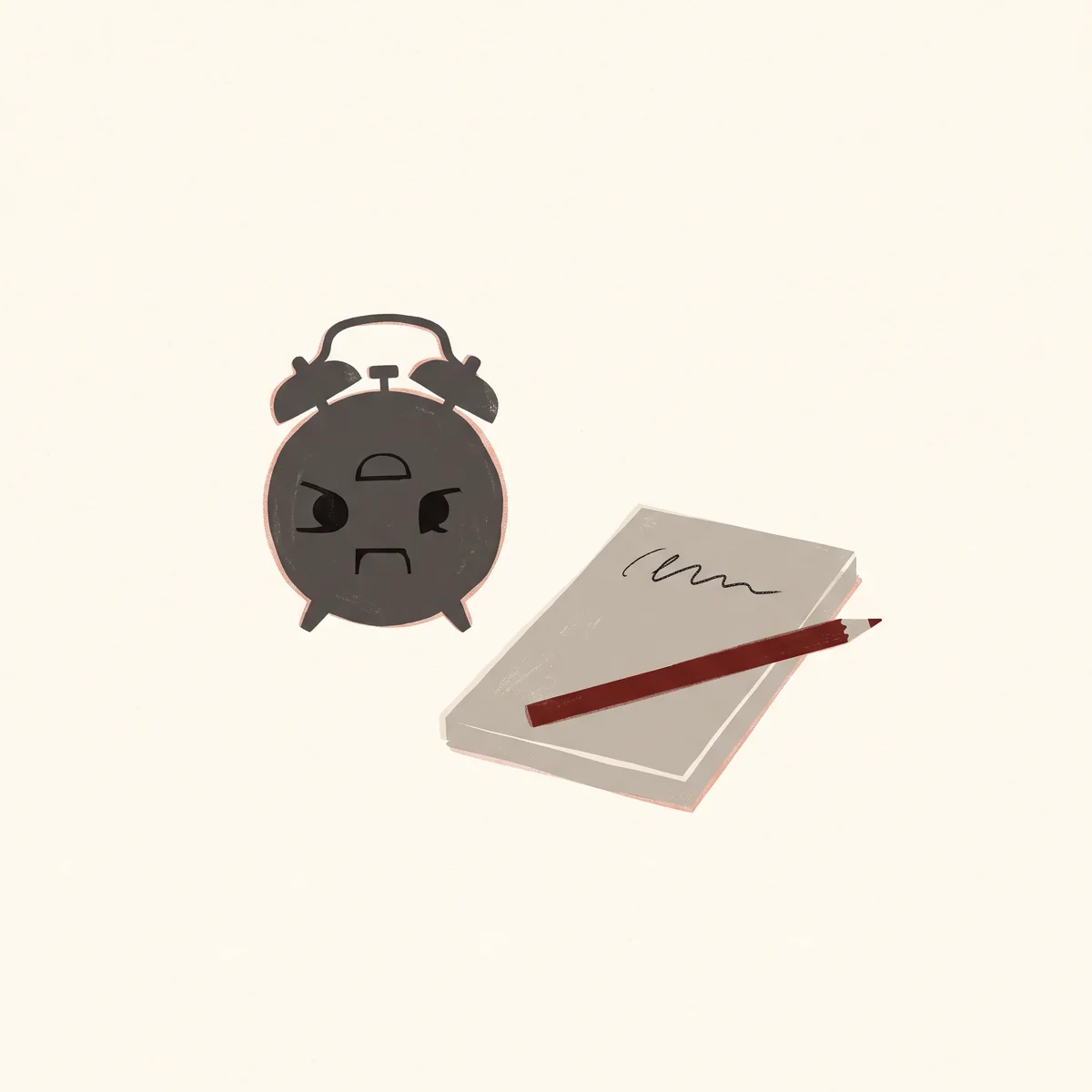
- Do not look at the time. Turn the clock to the wall. Nothing useful has ever been learned from it at that hour, and the arithmetic it invites is a reliable way of staying awake.
- Adjourn. Do not argue. The court does not have to be beaten. It has to be told that it does not sit at night. Keep a pad by the bed, write the worry down in one line, and give it an appointment: ten in the morning. This sounds too simple to work. It has been tested, and it works better than it sounds, apparently because a mind will loosen its grip on a thing once it is sure the thing will not be lost.
- If it goes past twenty minutes or so, get up. Go to another room. Keep the light low. Read something mild, on paper. Go back when sleepy and not before. This is the oldest and best-supported instruction in the treatment of insomnia, and the reason for it is unsentimental. A bed in which one lies awake and frightened, night after night, becomes a place the body associates with lying awake and frightened.
- Look at the evening drink. Alcohol brings sleep on and then breaks it. As it clears the system, in the second half of the night, there is a rebound into shallow, restless, wakeful sleep, often with a racing heart. A good deal of what people take for three o’clock anxiety is nine o’clock whisky.
One caution belongs here. An occasional bad night of this kind is part of having a mind. Waking in the early hours most nights for weeks, unable to return to sleep, with mornings that feel heavy and hopeless whatever the day holds, is something else. Early waking of that sort is one of the classic signs of depression, and it is a reason to see a doctor, not to buy a better pillow.
The rule
The most useful thing to take from all this is a rule of procedure, which can be adopted in daylight and then merely obeyed at night. No verdict reached between midnight and dawn is binding. No resignation is to be drafted, no relationship ended, no message sent, no conclusion about one’s character or prospects allowed to stand. Everything is referred to the morning sitting, when the defence will be present and the judge awake.
People who adopt the rule report that the thoughts still come. They are no less vivid. What changes is that the thoughts stop being taken as information. It becomes possible to lie there and recognise the performance, as one recognises a relative’s old complaint: here is the one about money, here is the one about my mother, and here, reliably, is the cab driver.
At 10.40 the next morning, between two meetings, Nandita’s phone shows a reply from the vice president. It was sent at 8.15. It says, in full: Thanks, looks good.
She reads it, feels almost nothing, and goes to her next meeting. The entire proceeding of the night, the managed exit, the loan on one salary, the man in the mirror in 2017, is dropped without comment. No retraction is issued.
The prosecution keeps no record of its losses. It will be back, fully confident, with a new case.
Sources
- Tubbs, A. S., Fernandez, F. X., Grandner, M. A., Perlis, M. L. and Klerman, E. B. (2022). “The mind after midnight: nocturnal wakefulness, behavioral dysregulation, and psychopathology.” Frontiers in Network Physiology, 1, 830338.
- Carney, C. E. and Waters, W. F. (2006). “Effects of a structured problem-solving procedure on pre-sleep cognitive arousal in college students with insomnia.” Behavioral Sleep Medicine, 4(1), 13 to 28. The written “worry appointment”.
- Bootzin, R. R. (1972). “Stimulus control treatment for insomnia.” Proceedings of the 80th Annual Convention of the American Psychological Association, 7, 395 to 396. The origin of “if you cannot sleep, get up”.
- Ebrahim, I. O., Shapiro, C. M., Williams, A. J. and Fenwick, P. B. (2013). “Alcohol and sleep I: effects on normal sleep.” Alcoholism: Clinical and Experimental Research, 37(4), 539 to 549.
The letter
One letter with each new piece. Nothing else, and your address goes nowhere.
We send one confirmation email. You are not on the list until you click it.
Replies
Nothing here yet.
Replies are for subscribers, signed in.
Sign inNot a subscriber yet?