The Sleep Score
She woke up feeling fine. Then her ring told her she had slept badly, and by ten o'clock it was right.
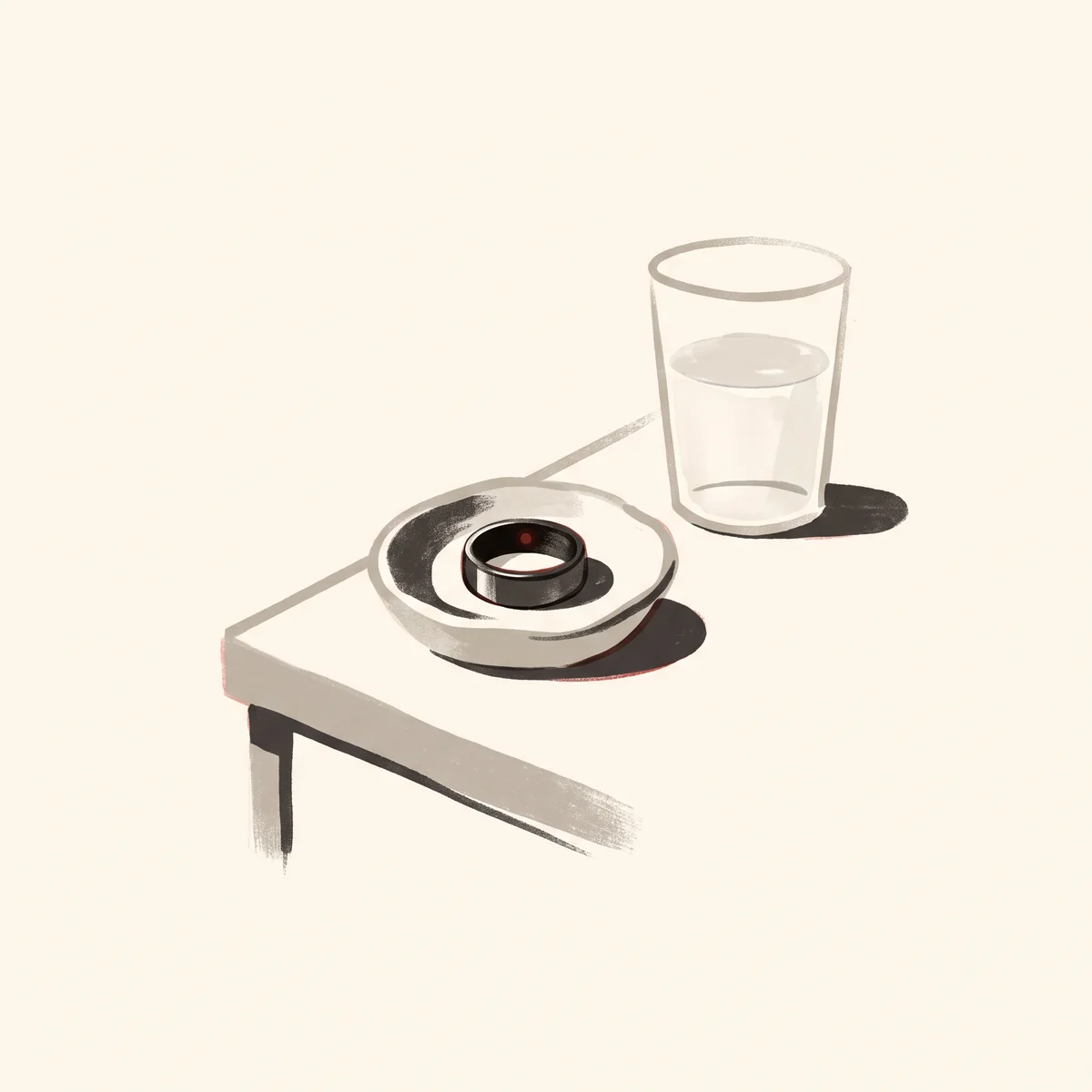
The Mind · · 4 min readMeghna woke at half past six on a Tuesday feeling perfectly all right. She lay there for a minute, quite comfortable, and then reached for her phone to find out how she had slept. The ring on her finger had been keeping watch. Sixty-one, said the app, in amber. Deep sleep: low. Restfulness: pay attention.
By ten she had a headache and was telling a colleague she had had a terrible night.
Sleep doctors have a name for what is happening to her, coined in 2017 by a group of American clinicians who had begun seeing a new kind of patient: people who arrived holding their tracker data, convinced by it that something was wrong, and sleeping worse for the conviction. They called it orthosomnia, the pursuit of correct sleep. It was a curiosity then. It is a trend now. Around a third of adults in one recent American survey track their sleep with a device, and of those, close to a third showed signs of being unhealthily preoccupied with the numbers. The internet, meanwhile, has supplied the hobby with a name, sleepmaxxing, and a kit: mouth tape, magnesium, blackout blinds, a bedroom at exactly eighteen degrees, no food after half past six.
Two facts about the devices are worth having. They are fairly good at measuring how long a person slept and poor at dividing that sleep into stages; the “deep sleep” figure that ruined Meghna’s morning is an estimate made from her pulse and her movements, with no access to her brain. And the score has power regardless of its accuracy. In experiments where people were handed invented sleep results, those told they had slept badly felt more tired and did worse on tests of attention, and those told they had slept well did better. The night was the same. The number was what changed the day.
The night was the same. The number was what changed the day.
The deeper difficulty is that sleep belongs to a small class of things that cannot be achieved by trying. It arrives when vigilance stops. A person lying in bed wondering whether tonight’s heart-rate variability will hold up has posted a sentry at the one gate that only opens when nobody is watching it. Ask any naturally good sleeper for their method and you will get a blank look. They have no routine. They get into bed and it happens, largely because it has never occurred to them that it might not.
The trackers are not useless. They are good at showing patterns over weeks: what two drinks do to a night, what a late coffee does, whether the snoring a partner complains of comes with drops in oxygen that a doctor ought to hear about. Taken as a rough logbook, consulted occasionally, a tracker is harmless and sometimes helpful. The trouble starts when it is treated as a daily verdict.
The test is simple. If the score changes how you feel more than the night did, the device has stopped measuring your sleep and started interfering with it. Take it off for a fortnight. You will have to judge your sleep the old way, by whether you feel rested, which has the advantage of being the only thing the whole exercise was ever for.
Meghna’s ring, for what it is worth, gave her an eighty-eight on the Thursday. She felt wonderful all day. She had been up twice with the dog.
Sources
- Baron, K. G., Abbott, S., Jao, N., Manalo, N. and Mullen, R. (2017). “Orthosomnia: are some patients taking the quantified self too far?” Journal of Clinical Sleep Medicine, 13(2), 351 to 354.
- Draganich, C. and Erdal, K. (2014). “Placebo sleep affects cognitive functioning.” Journal of Experimental Psychology: Learning, Memory, and Cognition, 40(3), 857 to 864.
- Gavriloff, D., Sheaves, B., Juss, A., Espie, C. A., Miller, C. B. and Kyle, S. D. (2018). “Sham sleep feedback delivered via actigraphy biases daytime symptom reports in people with insomnia: implications for insomnia disorder and wearable devices.” Journal of Sleep Research, 27(6), e12726.
The letter
One letter with each new piece. Nothing else, and your address goes nowhere.
We send one confirmation email. You are not on the list until you click it.


Replies
Nothing here yet.
Replies are for subscribers, signed in.
Sign inNot a subscriber yet?